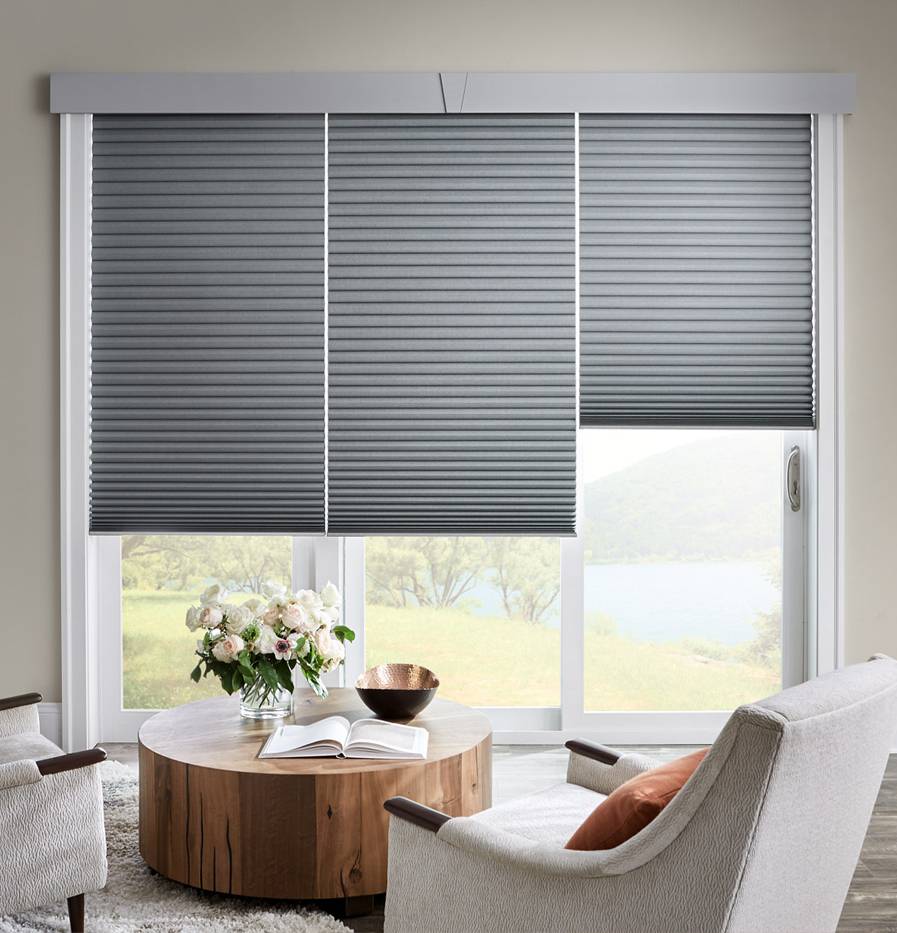
Cellular shades — sometimes called honeycomb shades — are engineered for one thing above all: insulation. The honeycomb cells trap a layer of air against the glass, dramatically reducing heat transfer and energy loss.
Sandwiched between the Atlantic Ocean and the Intracoastal, Palm Beach lives with constant salt aerosol, 80%+ summer humidity, and tropical UV that destroys cheap shutters in a single season. East-facing windows take full sunrise impact daily.
Mediterranean-revival homes in the Estate Section often have small, deep-set windows — the kind cellular shades fit beautifully. The honeycomb cells trap a layer of insulating air against the glass, dropping cooling costs in the older Mizner-era homes that lack the modern envelope insulation new construction has.
The cell count determines the insulation value. Single-cell is the most affordable and works in moderate-light rooms. Double-cell adds significant R-value — the right call for any room with a west-facing window or a glass door. Triple-cell hits the highest insulation values and is the spec for great rooms with vaulted glass walls.
Bedrooms get blackout cellular shades — the cells are lined with a blackout backing for total darkness. Living and dining rooms get light-filtering cells that diffuse soft daylight without harsh glare. Bathrooms and kitchens often get top-down/bottom-up cellular shades, so you can drop the top for daylight while keeping the bottom raised for privacy.
The honeycomb cell traps air, which is one of the best natural insulators. Properly installed double-cell cellular shades on a west-facing window can cut summer A/C load on that window by up to 50%. In Florida, where the A/C runs 8-10 months a year, that's a measurable utility-bill difference.
Mizner-influenced Mediterranean revival defines the historic estates — terra cotta tile, pecky cypress ceilings, courtyard pools. Modernist coastal builds dominate newer construction. Either way, the window treatments need to honor the architecture, not fight it.
Hurricane considerations: Palm Beach is squarely in the Atlantic hurricane corridor — Frances, Jeanne, Wilma, and recent close calls all kept building codes among the strictest in Florida. Impact-rated exterior protection isn't optional for ocean-facing properties.
Our salaried install team covers every Palm Beach neighborhood — from Worth Avenue to South End. We measure on your schedule and install on ours.
We design, build, and install the full range of window treatments for Palm Beach homes — not just cellular shades.
Free design, free precision measurement, lifetime warranty. We come to you, on your schedule, anywhere in Palm Beach.